
Computer Communication and Network Msc IT 2 Semester/Term University Of Sargodha (UOS) 2017
Discussion
Ask a question about this paper, or help someone else with theirs. Answers are emailed to whoever asked.
No questions yet — be the first to ask.
More Computer Communication and Network papers
See all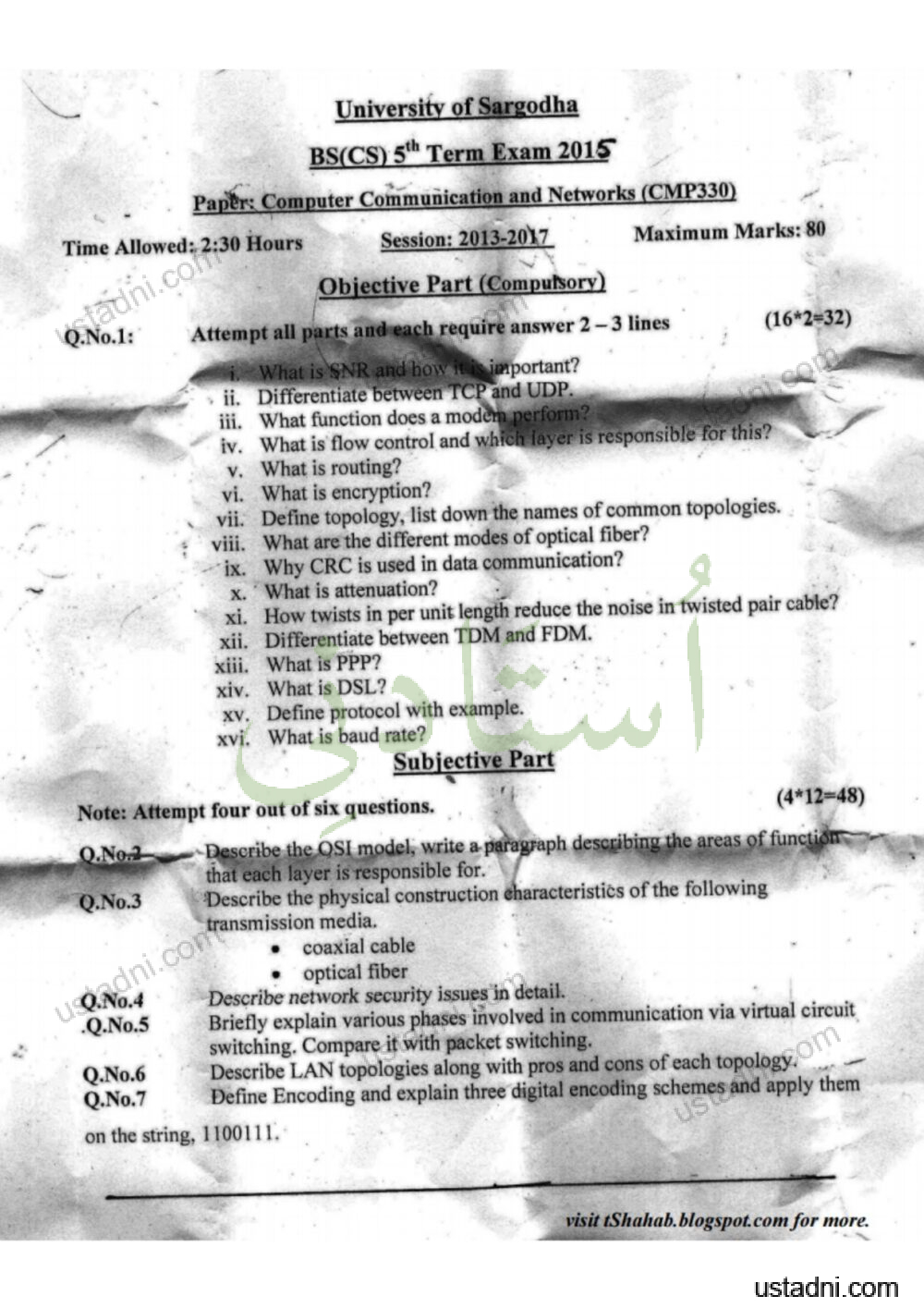 Computer Communication and Network BS 5 Semester/Term University Of Sargodha (UOS) 2015
Uploaded 1 year ago
Download ↓
Computer Communication and Network BS 5 Semester/Term University Of Sargodha (UOS) 2015
Uploaded 1 year ago
Download ↓
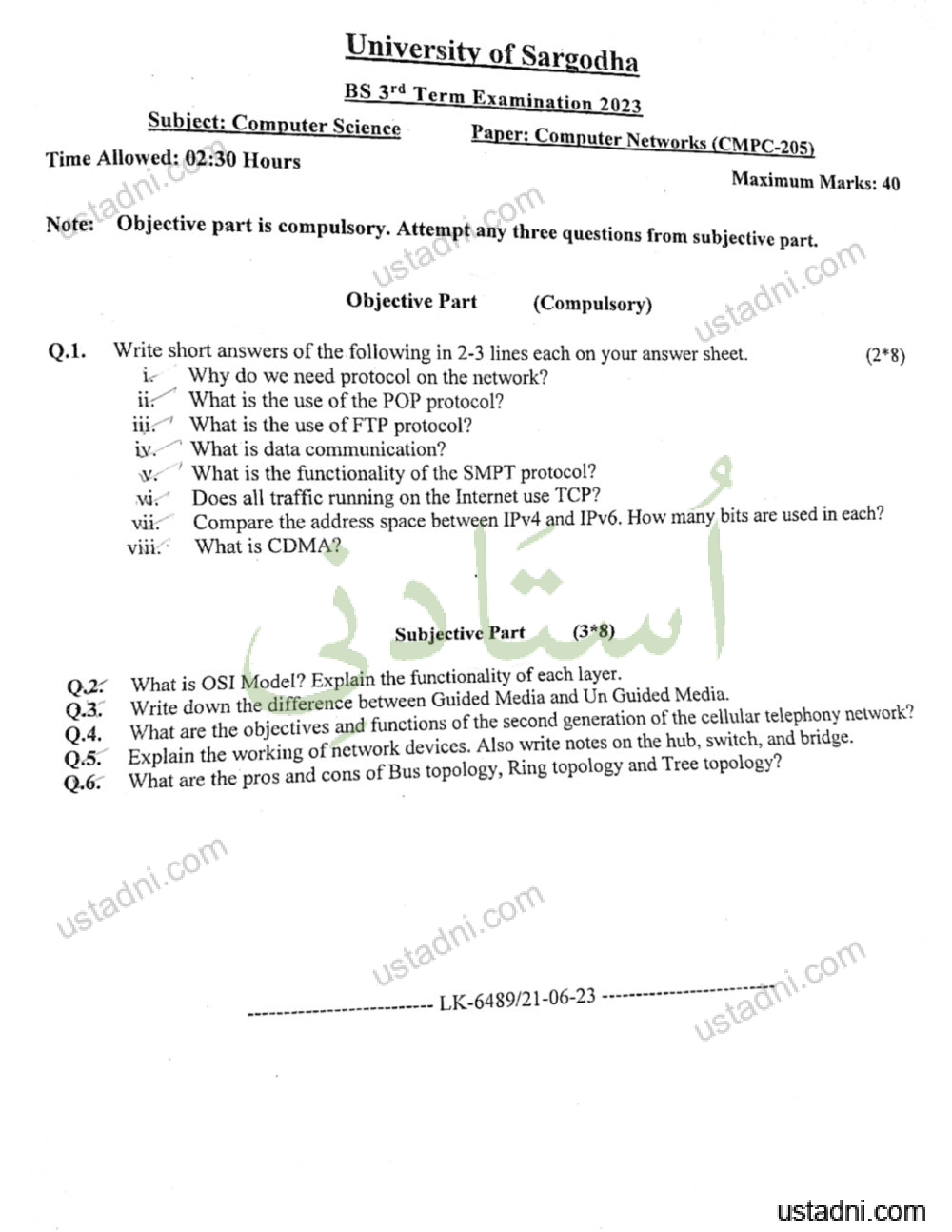 Computer Communication and Network BS/MPhil Computer Science/MS Computer Science 3 Semester/Term University Of Sargodha (UOS) 2023
Uploaded 1 year ago
Download ↓
Computer Communication and Network BS/MPhil Computer Science/MS Computer Science 3 Semester/Term University Of Sargodha (UOS) 2023
Uploaded 1 year ago
Download ↓
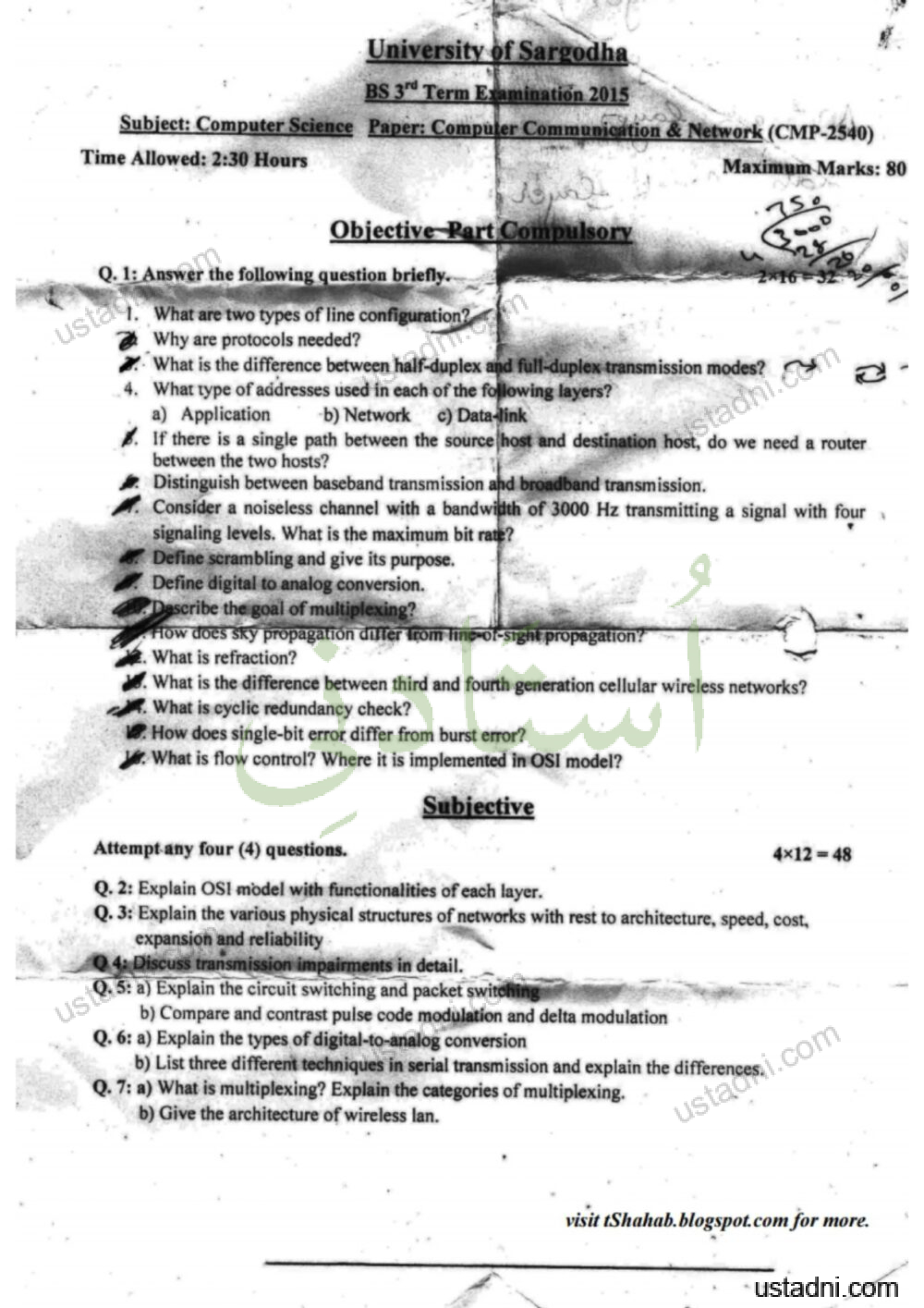 Computer Communication and Network BS/MPhil Computer Science/MS Computer Science 3 Semester/Term University Of Sargodha (UOS) 2015
Uploaded 1 year ago
Download ↓
Computer Communication and Network BS/MPhil Computer Science/MS Computer Science 3 Semester/Term University Of Sargodha (UOS) 2015
Uploaded 1 year ago
Download ↓
 Computer Communication and Network Msc IT University Of Sargodha (UOS) 2019
Uploaded 3 years ago
Download ↓
Computer Communication and Network Msc IT University Of Sargodha (UOS) 2019
Uploaded 3 years ago
Download ↓
 Computer Communication and Network Msc IT University Of Sargodha (UOS) 2018
Uploaded 3 years ago
Download ↓
Computer Communication and Network Msc IT University Of Sargodha (UOS) 2018
Uploaded 3 years ago
Download ↓
Paper text
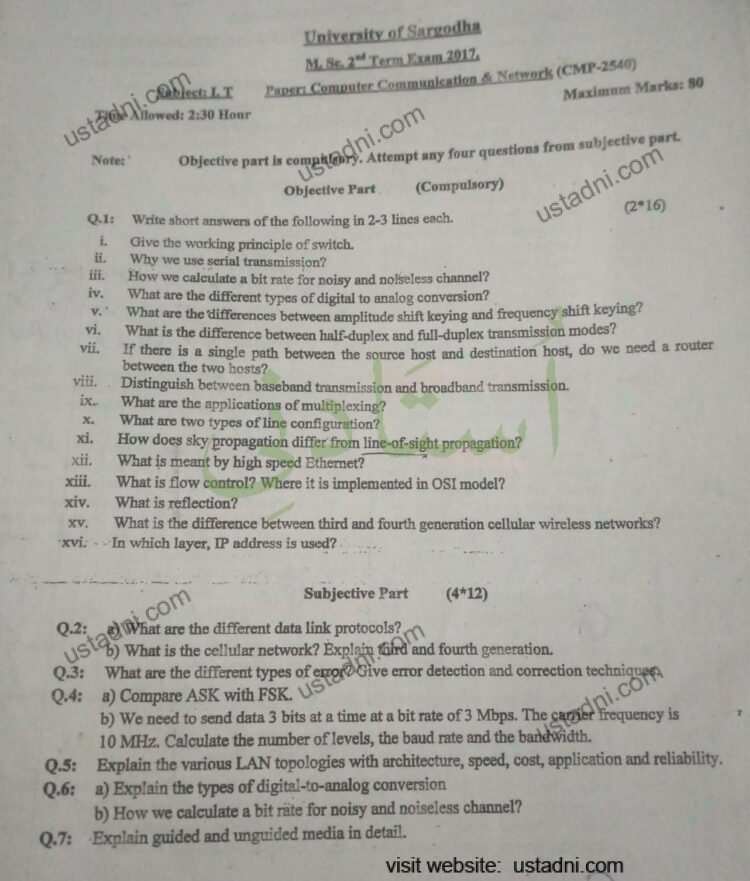
University of Sargodha
M.Ss.2* Term.Exam. 2917.
Pepsr: Computer Communicatien & Network (CMP-2540)
Maximum Marka: 80
best: IT
ustad howed: 2:30 HoR
Note:'
Objective Part
(Compulsory)
Q.1: Write short answers of the following in 2-3 lines each.
ustadni.com
(2*16)
i.
ii.
ill.
iv.
v.
vi.
vii.
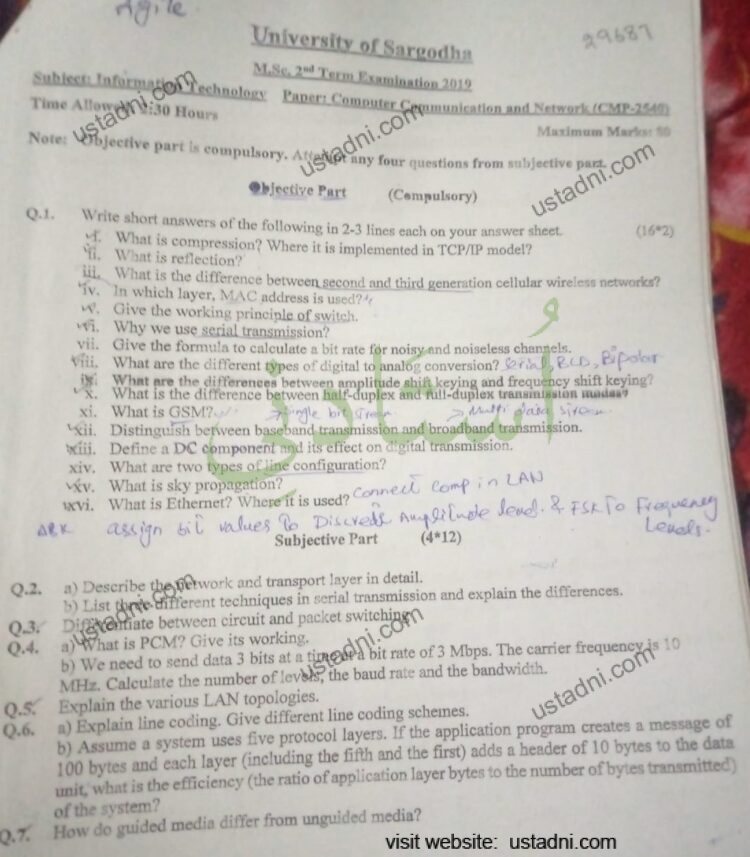
Give the working principle of switch.
Why we use serial transmission?
How we calculate a bit rate for noisy and notseless channel?
What are the different types of digital to analog conversion?
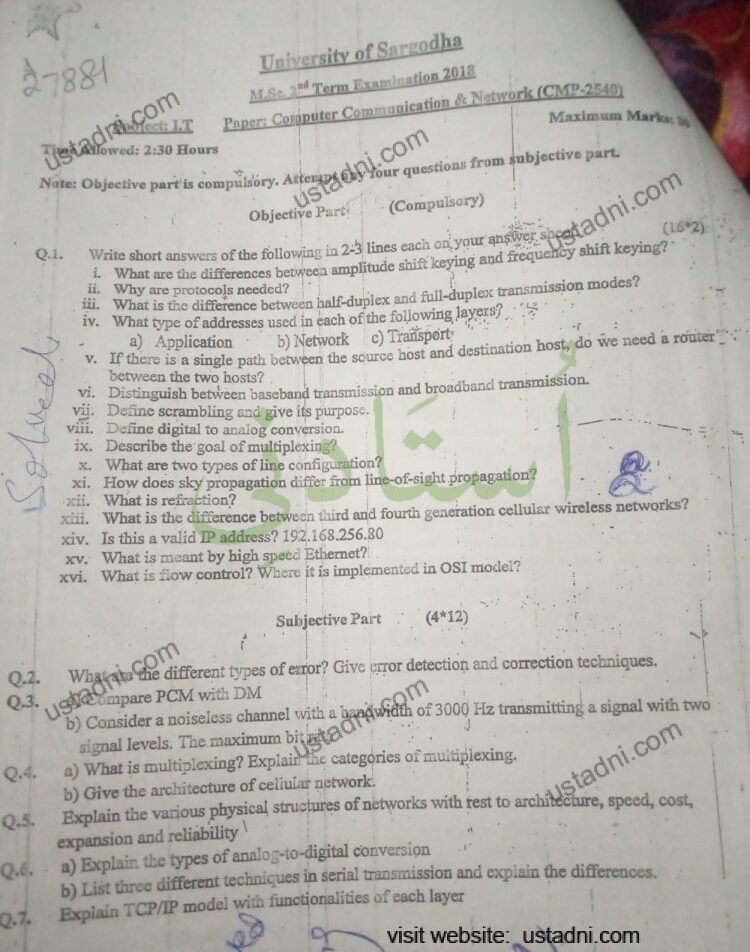
What are the differences between amplitude shift keying and frequency shift keying?
What is the difference between half-duplex and full-duplex transmission modes?
If there is a single path between the source host and destination host, do we need a router
between the two hosts?
vili.
ix.
x.
xi.
xii.
xili.
xiv.
XV.
Distinguish between baseband transmission and broadband transmission.
What are the applications of multiplexing?
What are two types of line configuration?
How does sky propagation differ from line-of-sight propagation?
What is meant by high speed Ethernet?
What is flow control? Where it is implemented in OSI model?
What is reflection?
What is the difference between third and fourth generation cellular wireless networks?
xvi. - - In which layer, IP address is used?
Subjective Part
(4*12)
UStag. What are the different data link protocols?
b) What is the cellular network? Explain third and fourth generation.
Q.3:
Q.4:
1) Compute i on pe ser dive mr deto and erection eige.
b) We need to send data 3 bits at a time at a bit rate of 3 Mbps. The carder frequency is
10 MHz. Calculate the number of levels, the baud rate and the bandwidth.
Q.5:
Q.6:
Explain the various LAN topologies with architecture, speed, cost, application and reliability.
a) Explain the types of digital-to-analog conversion
b) How we calculate a bit rate for noisy and noiseless channel?
Q.7: Explain guided and unguided media in detail.
visit website: ustadni.com