
Computer Network BS/MPhil Information Technology/MS Information Technology 4 Semester/Term University Of Sargodha (UOS) 2024
Discussion
Ask a question about this paper, or help someone else with theirs. Answers are emailed to whoever asked.
No questions yet — be the first to ask.
More Computer Network papers
See all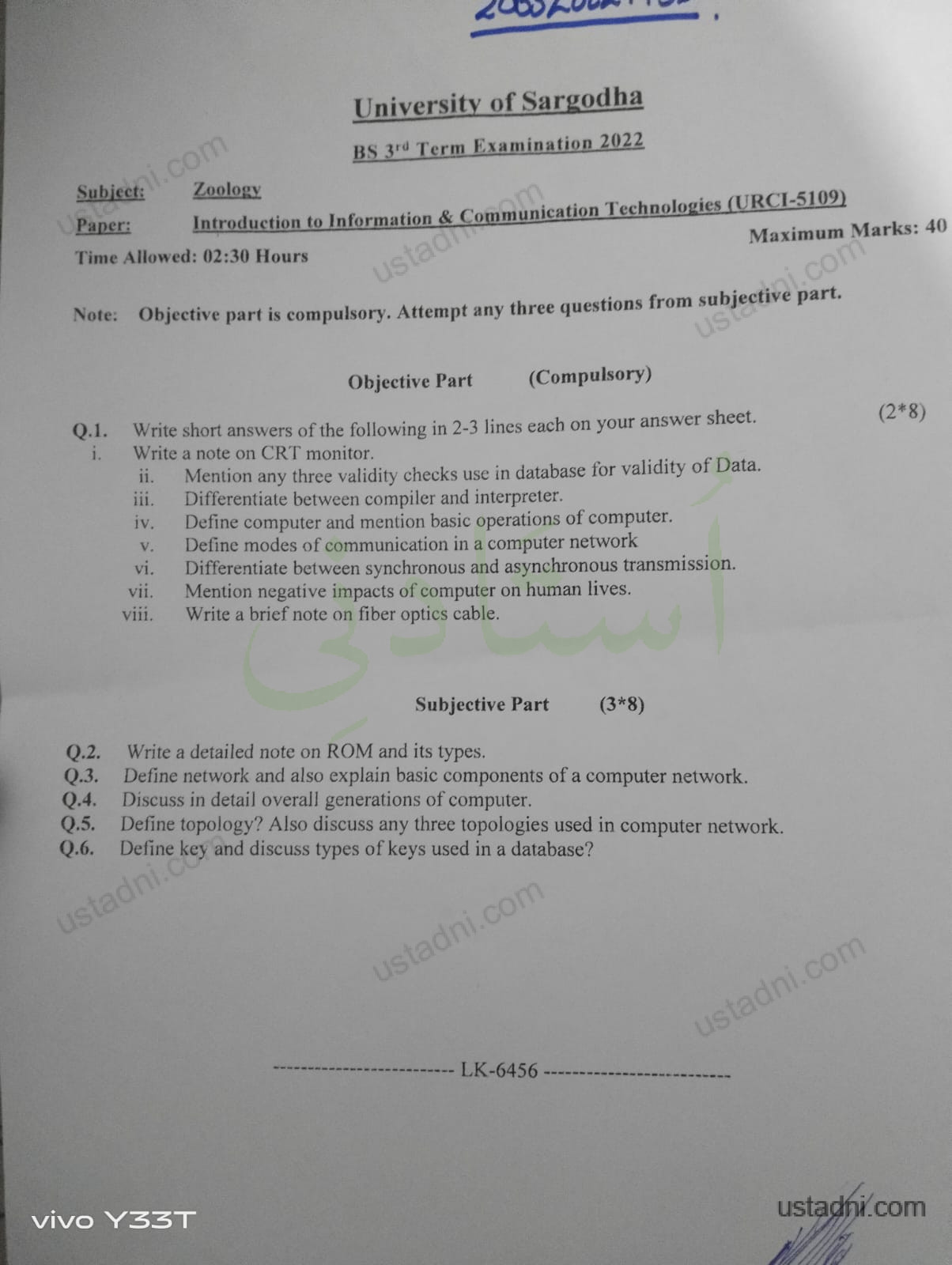 Computer Network BS 3 Semester/Term University Of Sargodha (UOS) 2022
Uploaded 29 days ago · by Foziaahmed
Download ↓
Computer Network BS 3 Semester/Term University Of Sargodha (UOS) 2022
Uploaded 29 days ago · by Foziaahmed
Download ↓
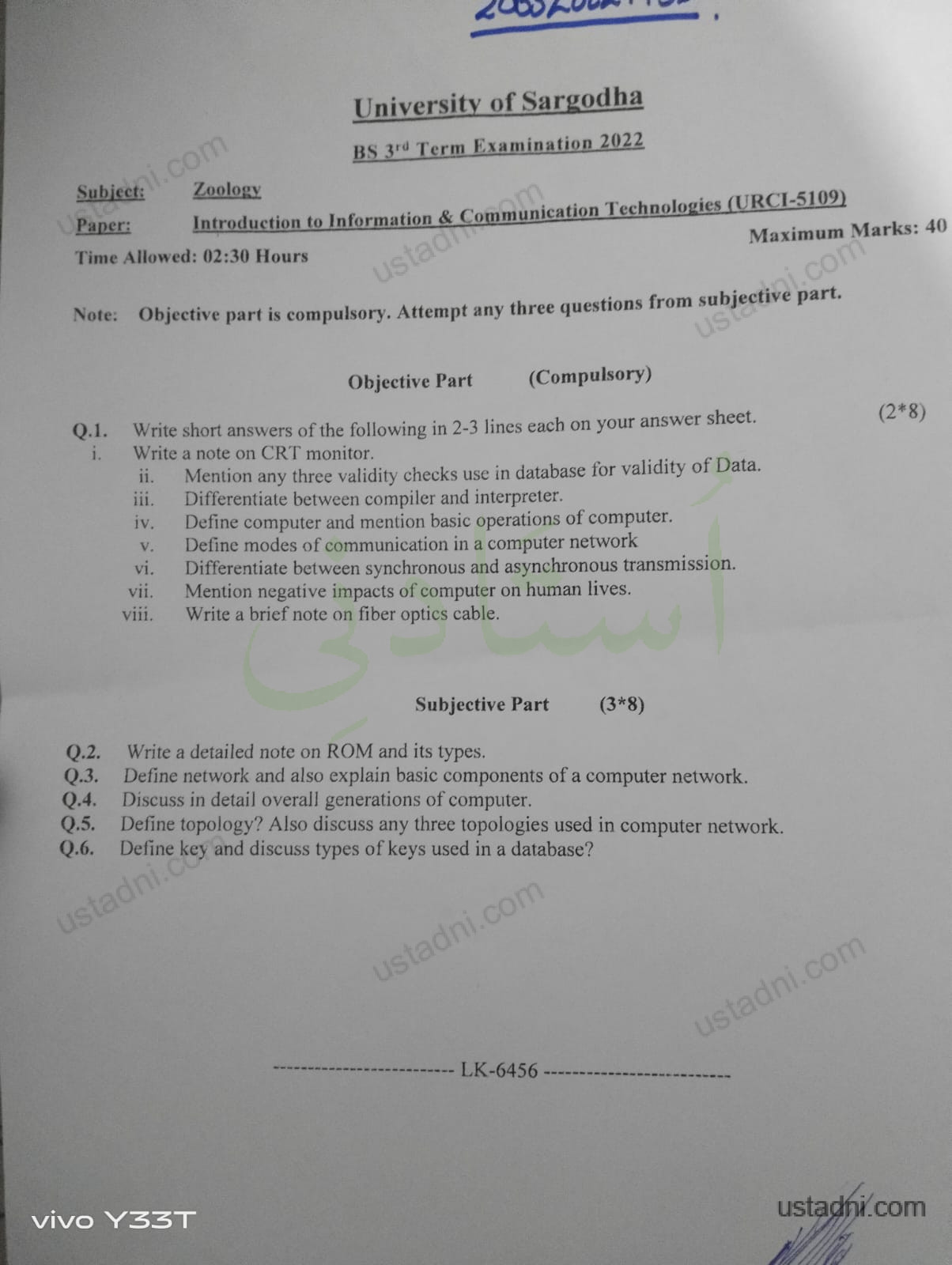 Computer Network BS 3 Semester/Term University Of Sargodha (UOS) 2022
Uploaded 29 days ago · by Foziaahmed
Download ↓
Computer Network BS 3 Semester/Term University Of Sargodha (UOS) 2022
Uploaded 29 days ago · by Foziaahmed
Download ↓
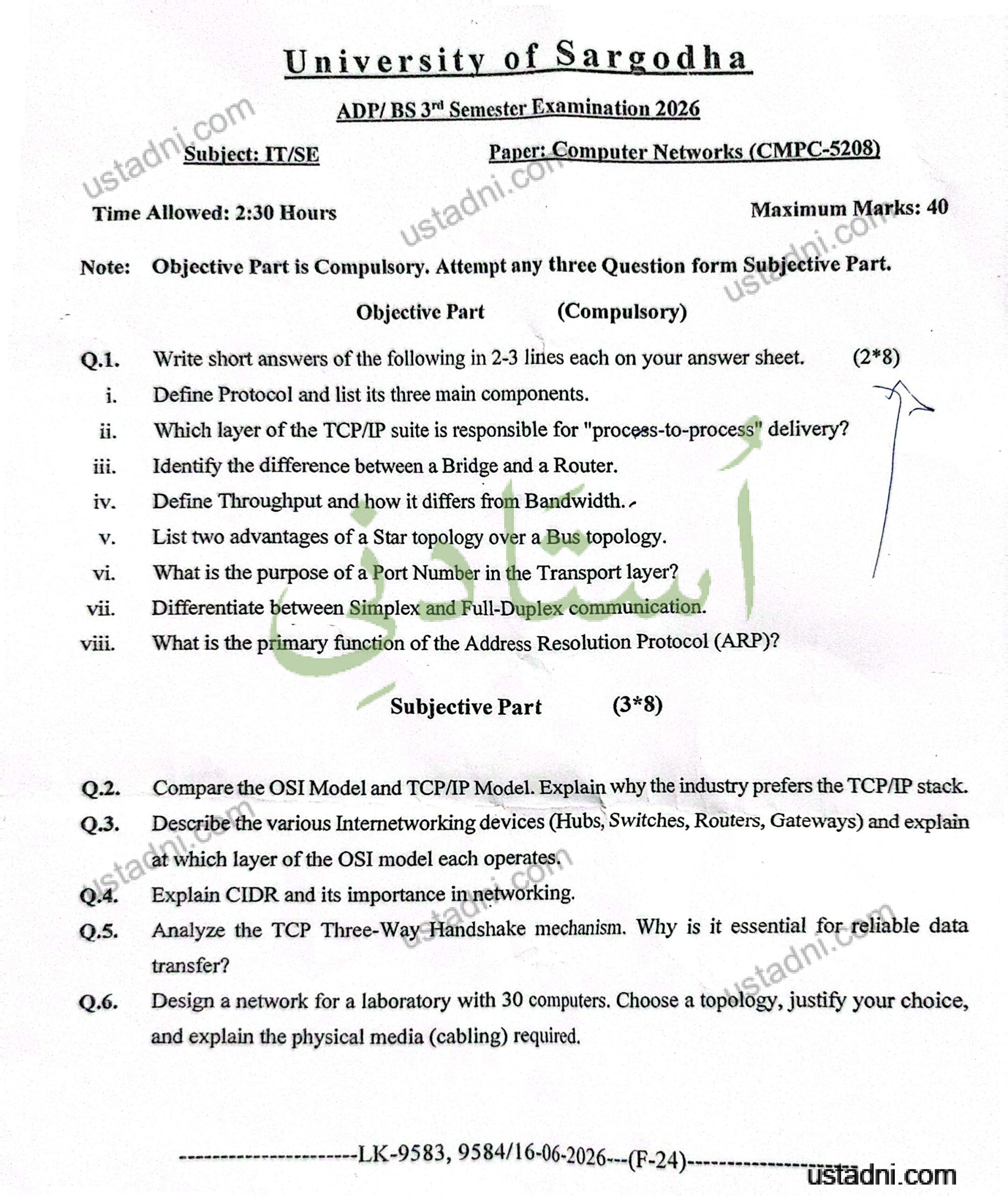 Computer Network ADP/BS 3 Semester/Term University Of Sargodha (UOS) 2026
Uploaded 2 months ago
Download ↓
Computer Network ADP/BS 3 Semester/Term University Of Sargodha (UOS) 2026
Uploaded 2 months ago
Download ↓
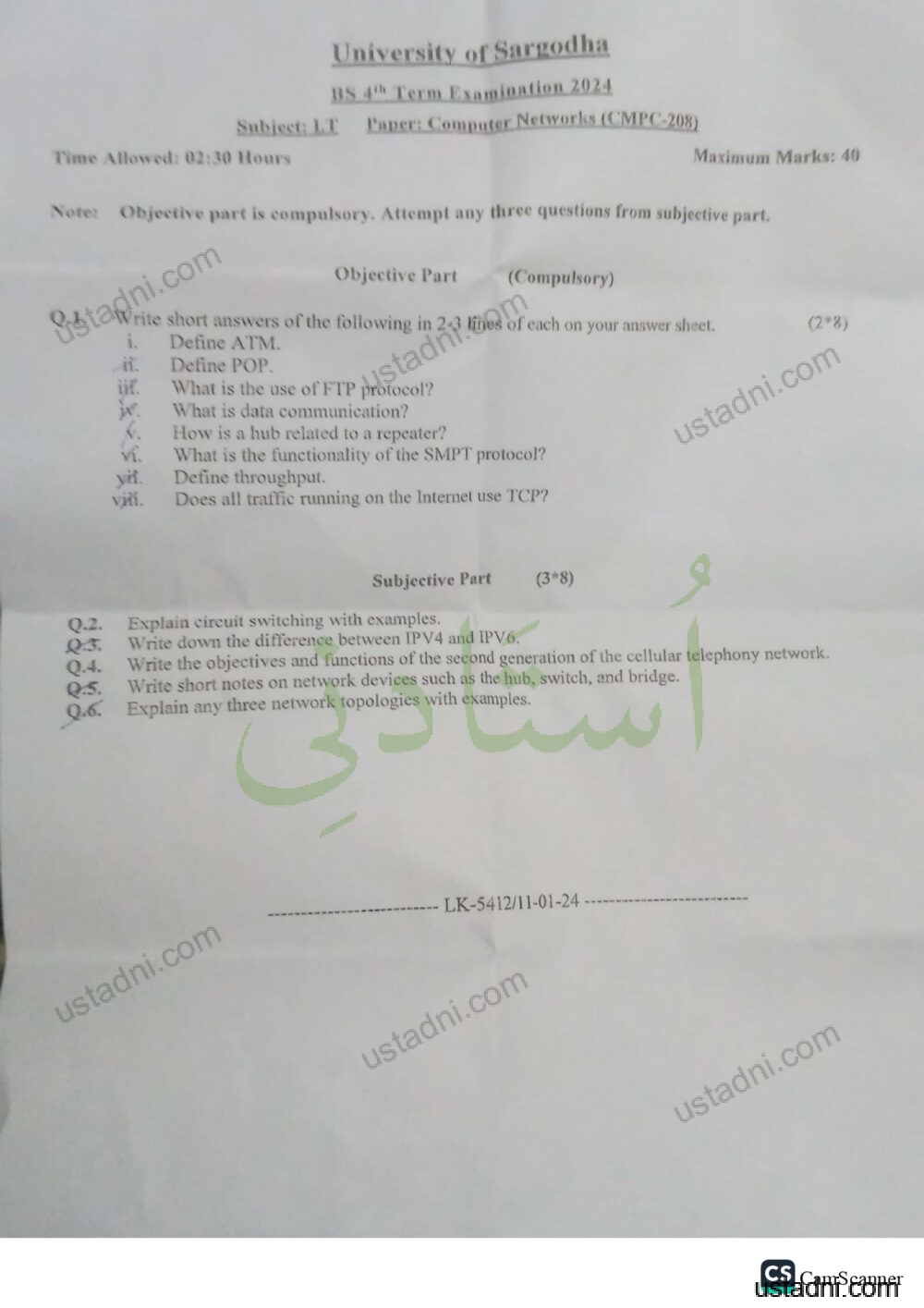 Computer Network BS 4 Semester/Term University Of Sargodha (UOS) 2024
Uploaded 1 year ago
Download ↓
Computer Network BS 4 Semester/Term University Of Sargodha (UOS) 2024
Uploaded 1 year ago
Download ↓
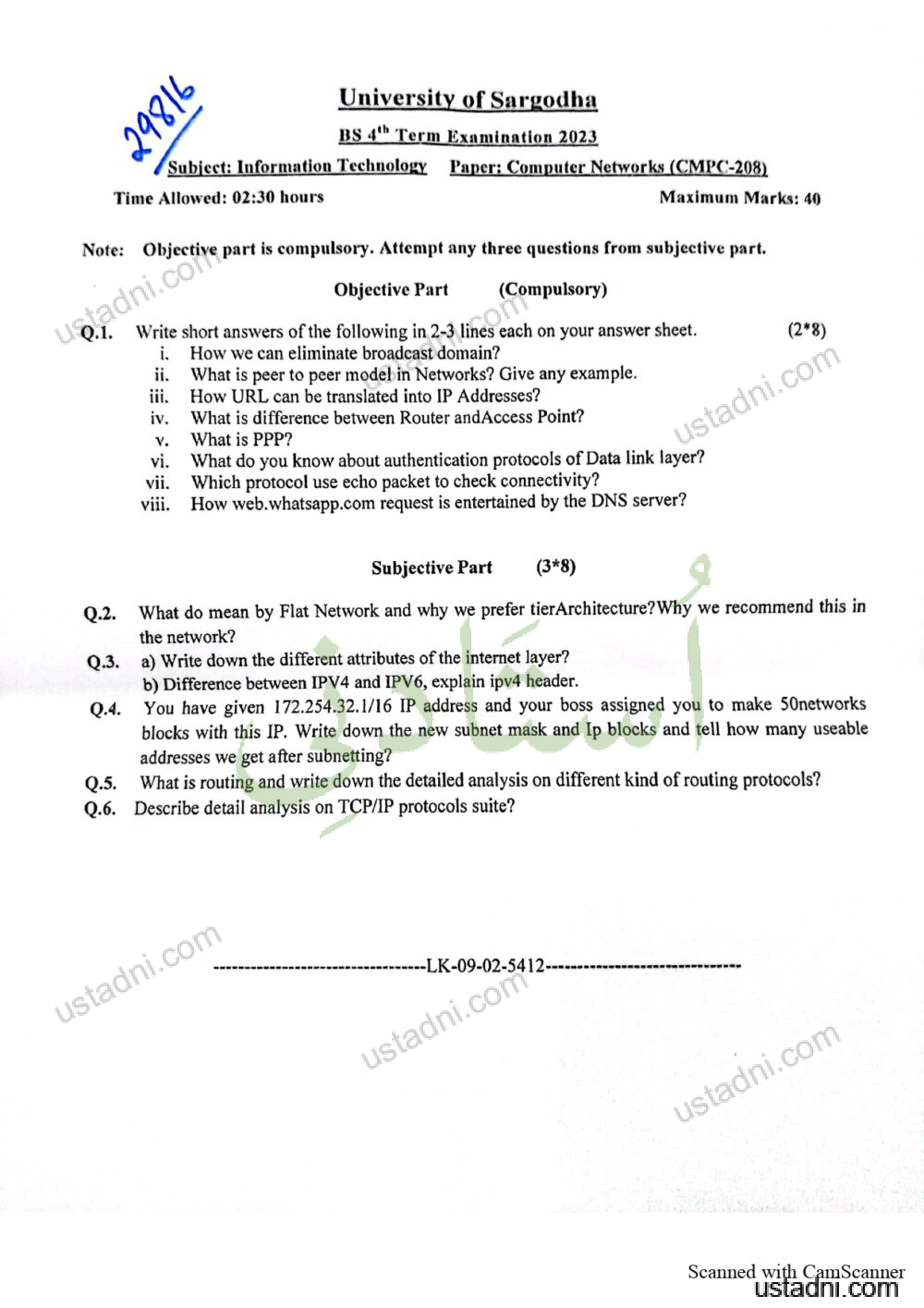 Computer Network BS/MPhil Information Technology/MS Information Technology 4 Semester/Term University Of Sargodha (UOS) 2023
Uploaded 1 year ago
Download ↓
Computer Network BS/MPhil Information Technology/MS Information Technology 4 Semester/Term University Of Sargodha (UOS) 2023
Uploaded 1 year ago
Download ↓
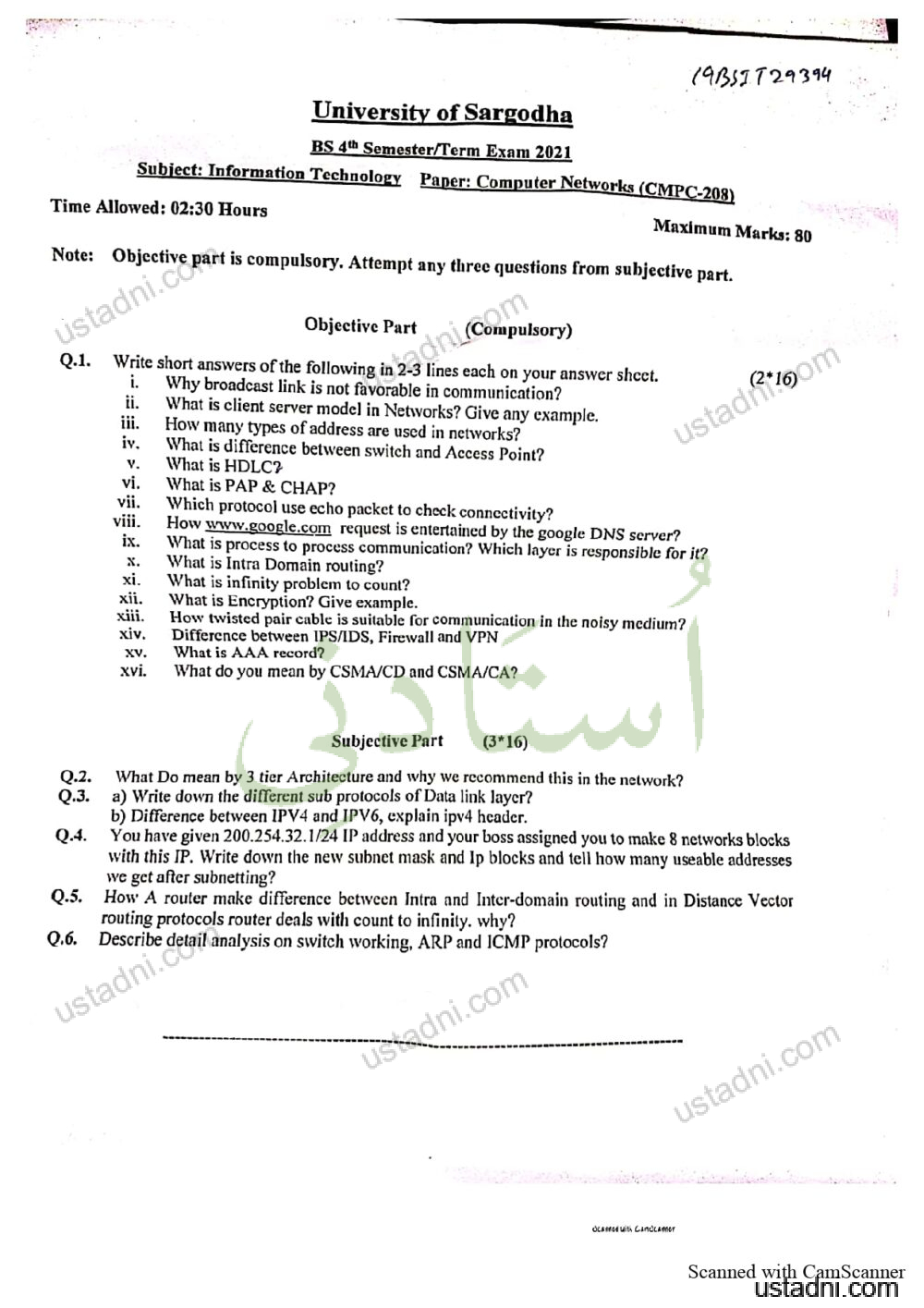 Computer Network BS/MPhil Information Technology/MS Information Technology 4 Semester/Term University Of Sargodha (UOS) 2021
Uploaded 1 year ago
Download ↓
Computer Network BS/MPhil Information Technology/MS Information Technology 4 Semester/Term University Of Sargodha (UOS) 2021
Uploaded 1 year ago
Download ↓
Paper text
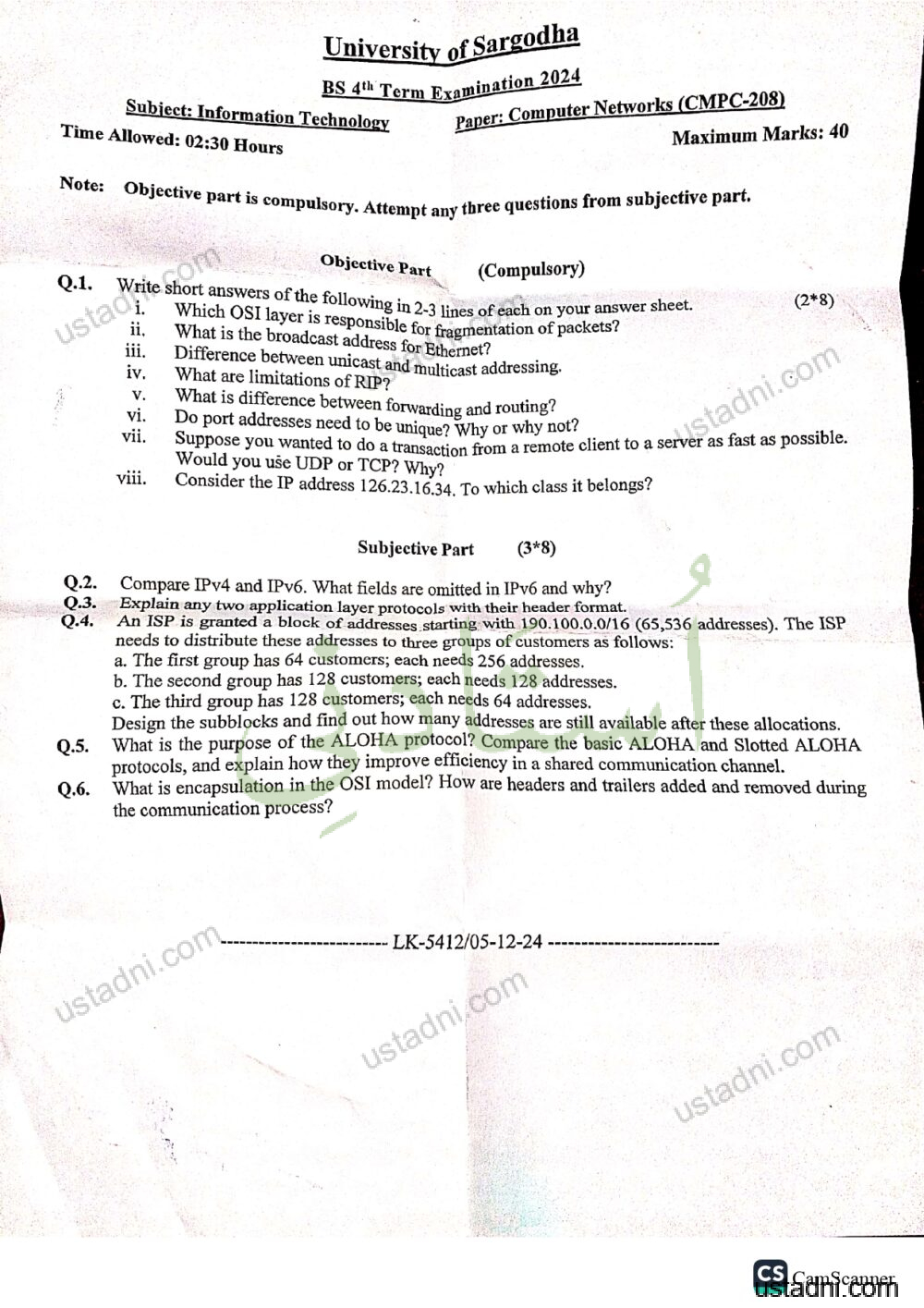
University of Sargodha
BS 4'' Term Examination 2024
Subject: Information Technology
Paper: Computer Networks (CMPC-208)
Time Allowed: 02:30 Hours
Maximum Marks: 40
Note: Objective part is compulsory. Attempt any three questions from subjective part.
Objective Part
(Compulsory)
Q.1. Write short answers of the following in 2-3 lines of each on your answer sheet.
Which OSI layer is responsible for fragmentation of packets?
(2*8)
What is the broadcast address for Ethernet?
Difference between unicast and multicast addressing.
iv.
V.
vi.
vii.
What are limitations of RIP?
1.00m
What is difference between forwarding and routing?
Do port addresses need to be unique? Why or why not?
Suppose you wanted to do a transaction from a remote client to a server as fast as possible.
vili.
Would you use UDP or TCP? Why?
Consider the IP address 126.23.16.34. To which class it belongs?
Subjective Part (3*8)
Q.2. Compare IPv4 and IPv6. What fields are omitted in IPv6 and why?
Q.3.
Explain any two application layer protocols with their header format.
Q.4.
An ISP is granted a block of addresses starting with 190.100.0.0/16 (65,536 addresses). The ISP
needs to distribute these addresses to three groups of customers as follows:
a. The first group has 64 customers; each needs 256 addresses.
b. The second group has 128 customers; each needs 128 addresses.
c. The third group has 128 customers; each needs 64 addresses.
Design the subblocks and find out how many addresses are still available after these allocations.
Q.5.
What is the purpose of the ALOHA protocol? Compare the basic ALOHA and Slotted ALOHA
protocols, and explain how they improve efficiency in a shared communication channel.
Q.6.
What is encapsulation in the OSI model? How are headers and trailers added and removed during
the communication process?
ustadni.com
LK-5412/05-12-24 -
ustadni.com
ustadni.com
CS