
a. Write |A U C| b. Write (A N B) × (A N C) Q 3: Answer these questions about the rooted tree illustrated? a) What is the height of the given tree? (12] b) Which vertices are ancestors of q?
![a. Write |A U C| b. Write (A N B) × (A N C) Q 3: Answer these questions about the rooted tree illustrated? a) What is the height of the given tree? (12] b) Which vertices are ancestors of q? — page 1](/uploads/2023/01/a-write-a-u-c-b-write-a-n-b-x-a-n-c-q-3-answer-these-questions-about-the-rooted-tree-illustrated-a-what-is-the-height-of-the-given-tree.jpg)
Discussion
Ask a question about this paper, or help someone else with theirs. Answers are emailed to whoever asked.
No questions yet — be the first to ask.
More Discrete Structures papers
See all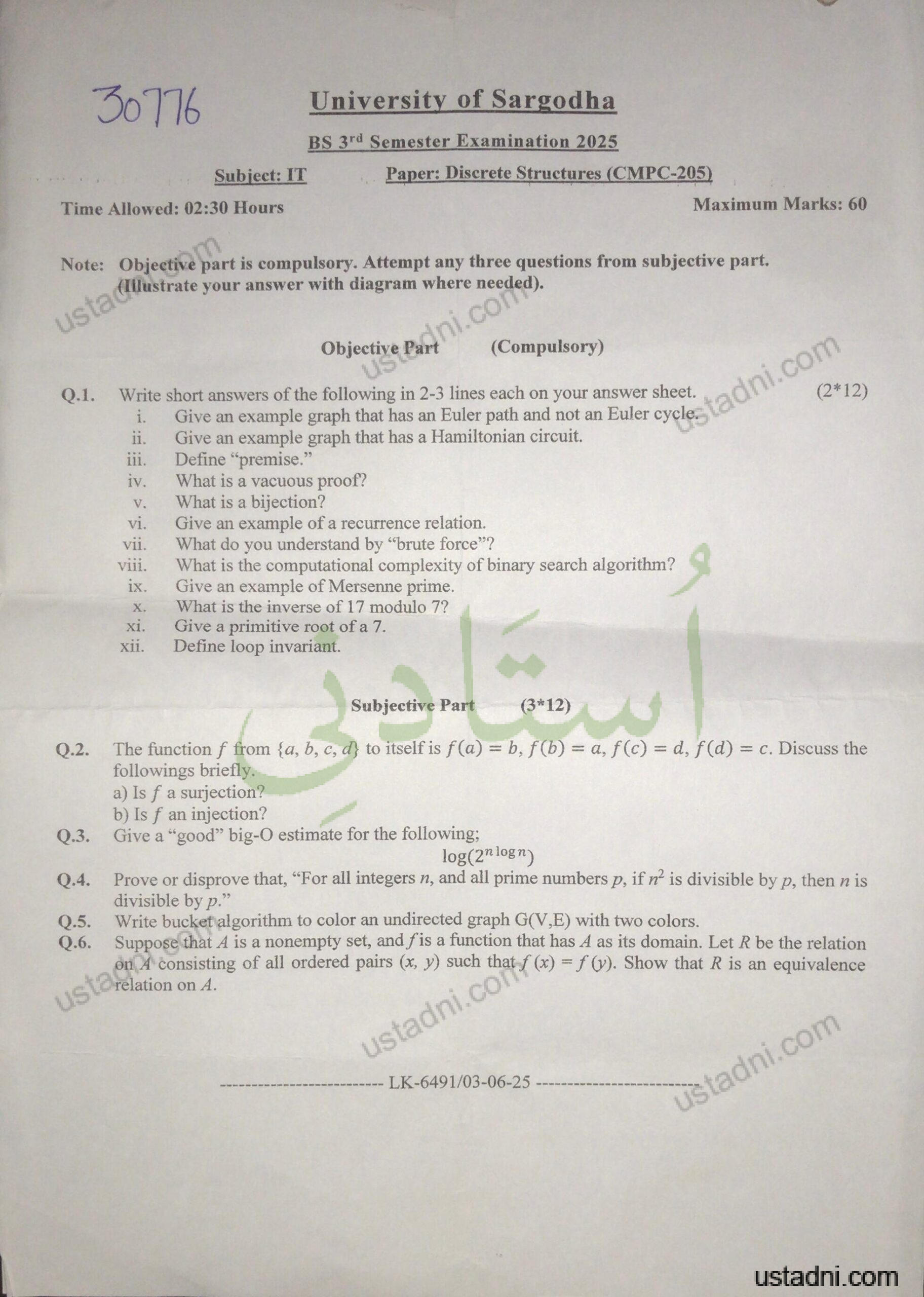 Discrete Structures University Of Sargodha (UOS) 2025
Uploaded 3 months ago
Download ↓
Discrete Structures University Of Sargodha (UOS) 2025
Uploaded 3 months ago
Download ↓
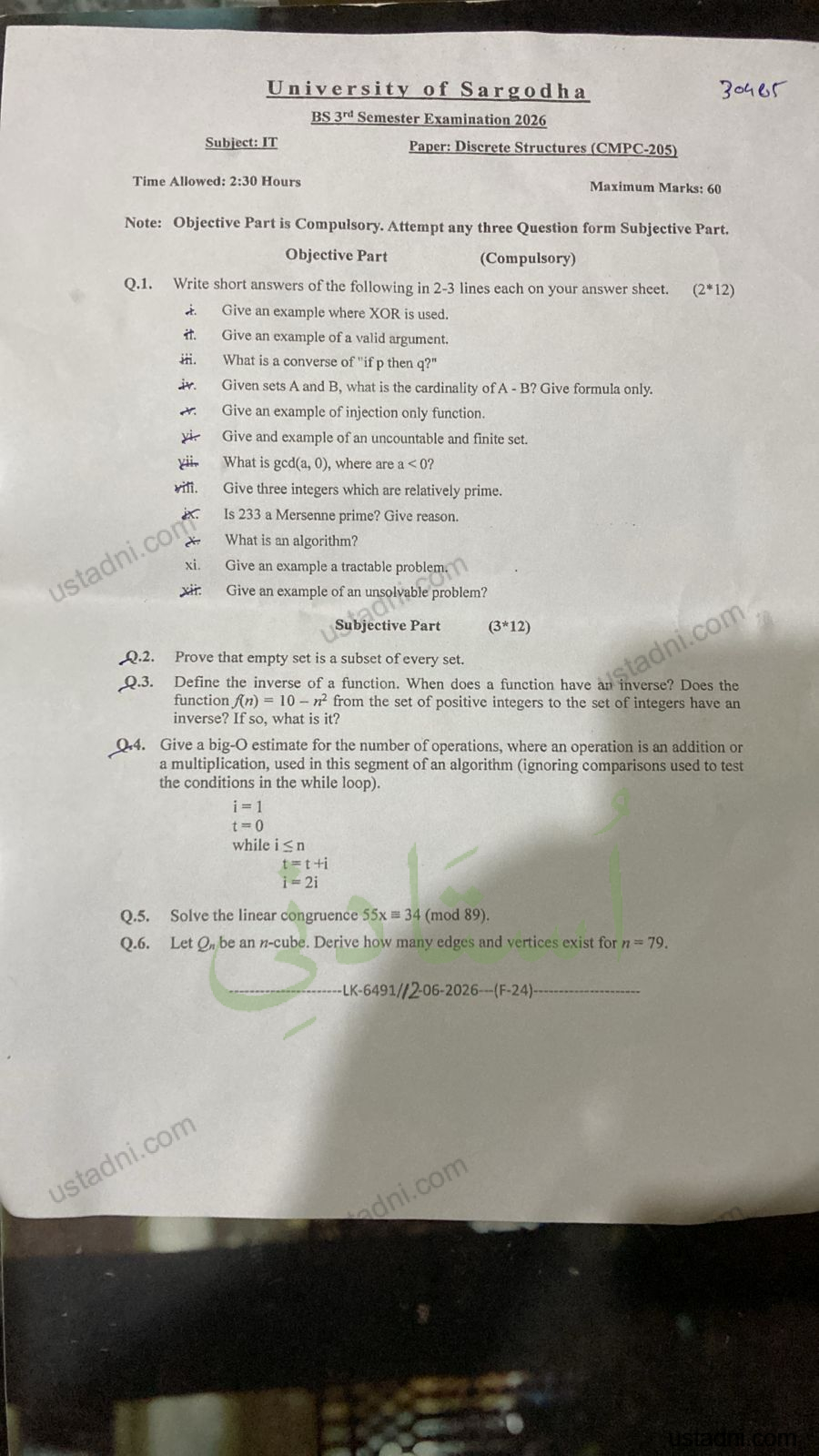 Discrete Structures BS 3 Semester/Term University Of Sargodha (UOS) 2026
Uploaded 3 months ago
Download ↓
Discrete Structures BS 3 Semester/Term University Of Sargodha (UOS) 2026
Uploaded 3 months ago
Download ↓
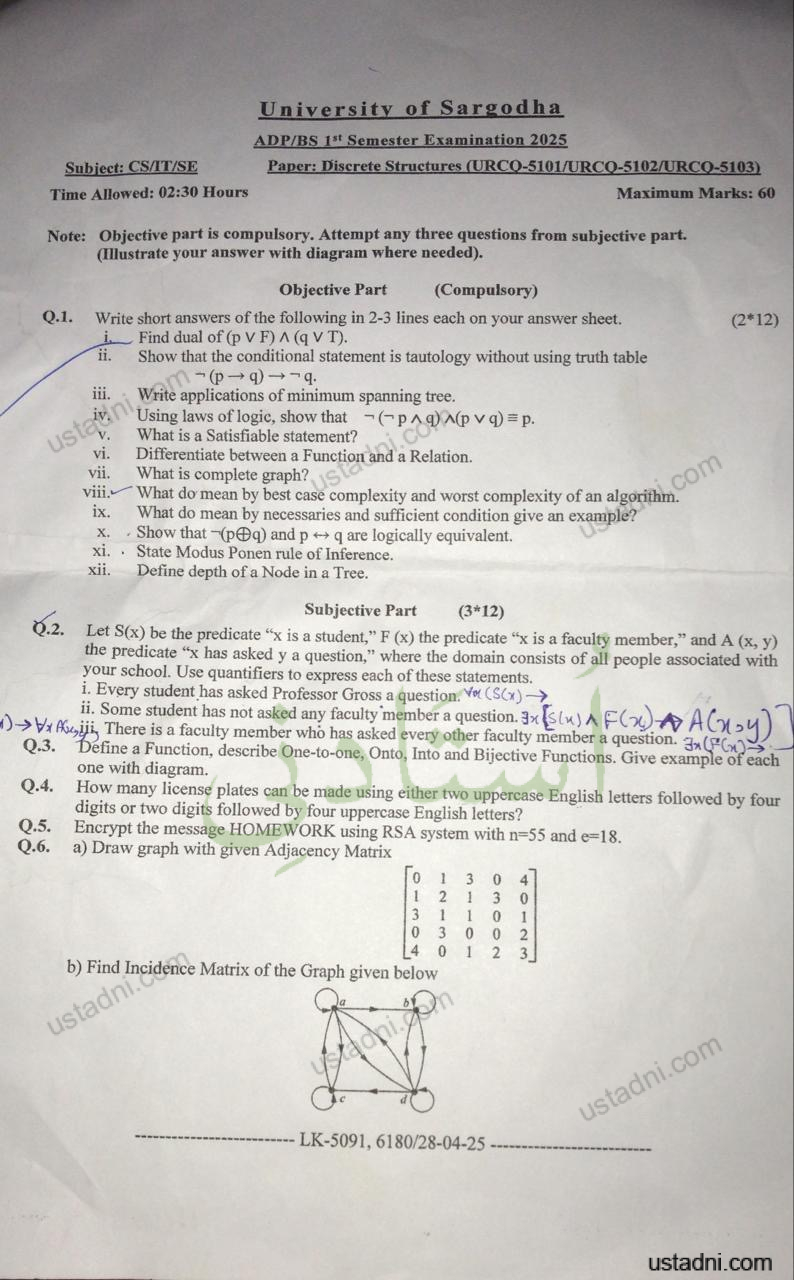 Discrete Structures (URCO-5101/URCO-5102/URCO-5103)- Subject: CS/IT/SE UOS - ADP/BS 1st Semester Examination 2025
Uploaded 10 months ago
Download ↓
Discrete Structures (URCO-5101/URCO-5102/URCO-5103)- Subject: CS/IT/SE UOS - ADP/BS 1st Semester Examination 2025
Uploaded 10 months ago
Download ↓
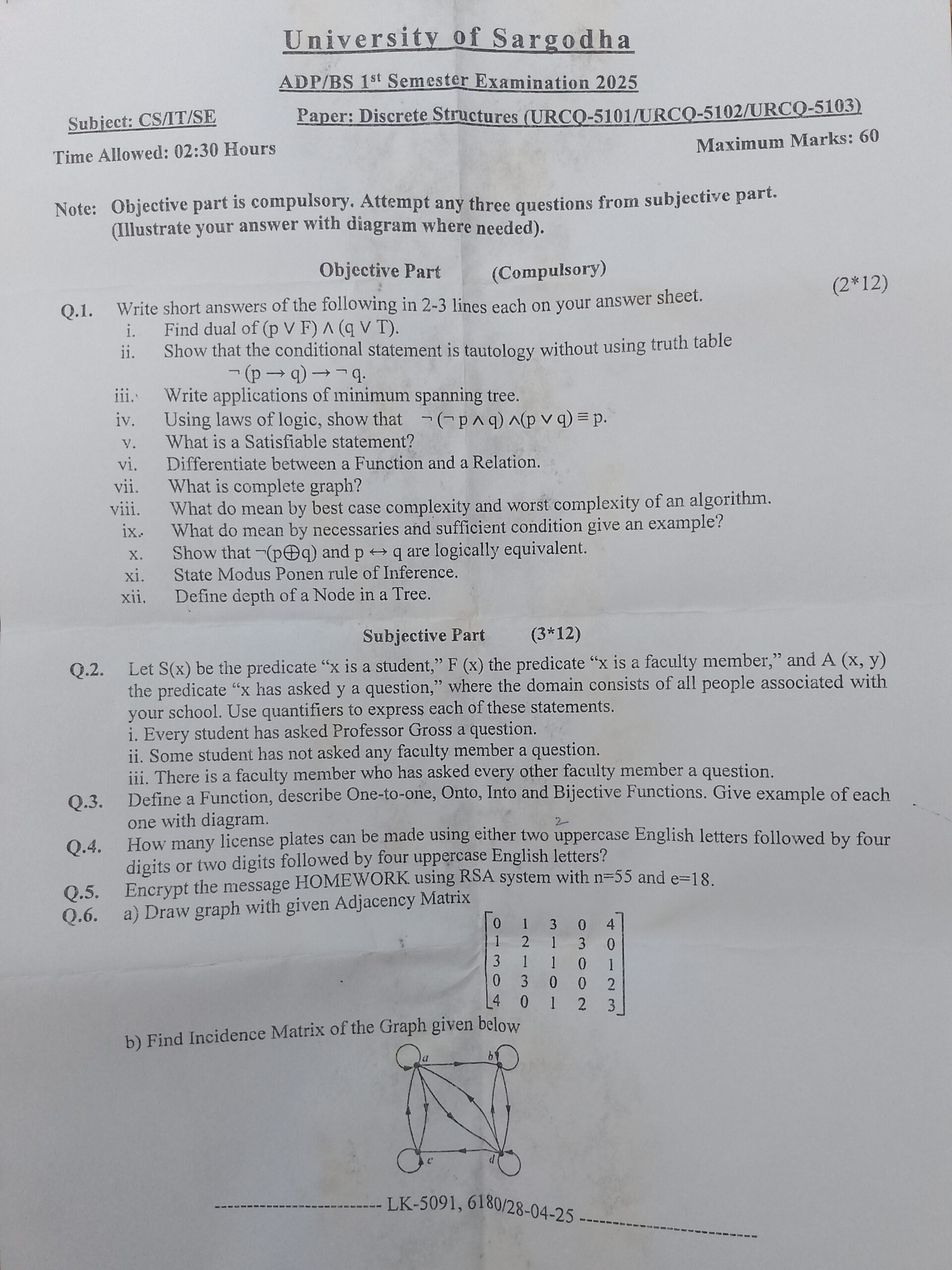 Discrete Structures ADP/BS 1 Semester/Term UOS — University of Sargodha 2025
Uploaded 11 months ago
Download ↓
Discrete Structures ADP/BS 1 Semester/Term UOS — University of Sargodha 2025
Uploaded 11 months ago
Download ↓
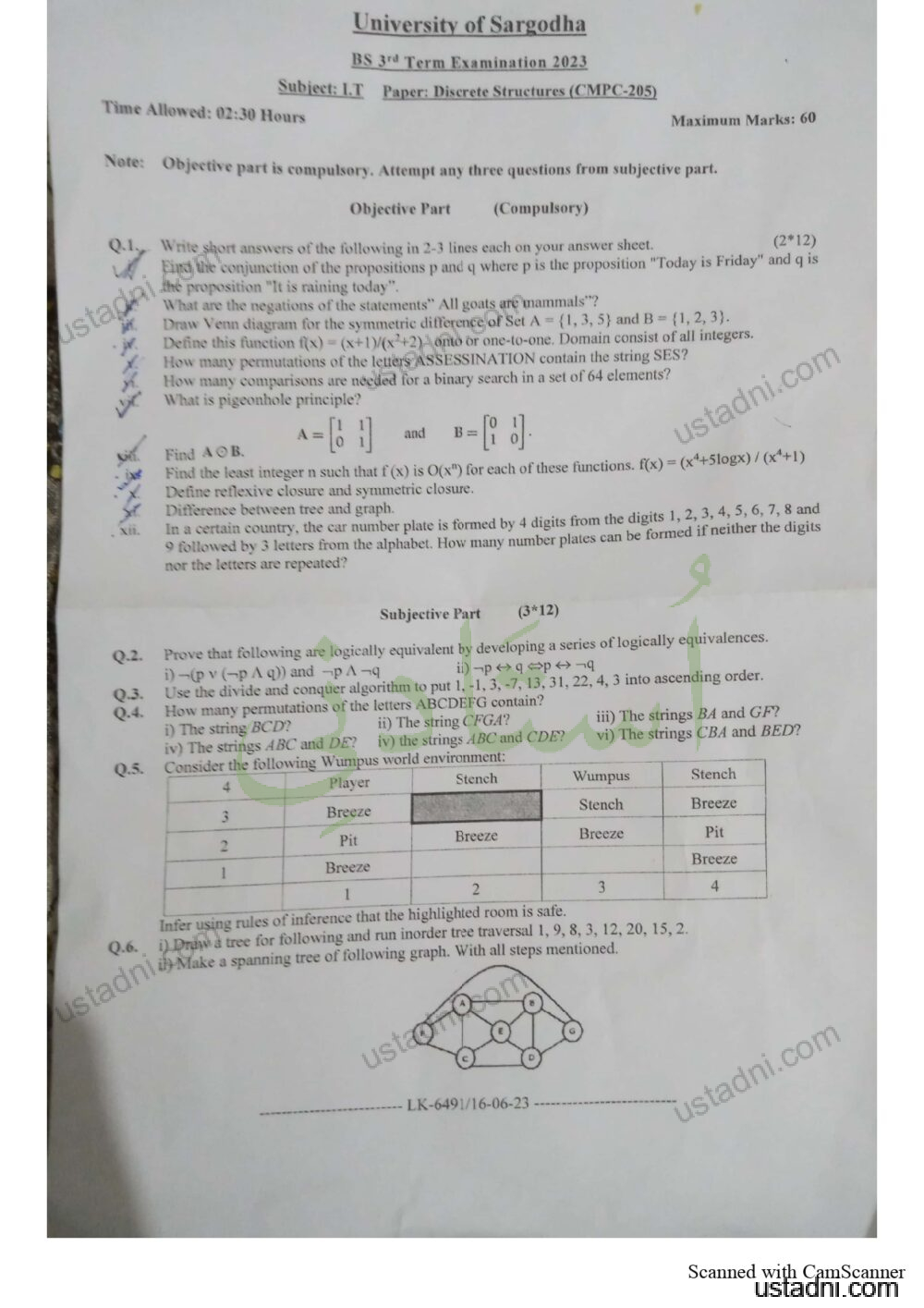 Discrete Structures B.ED/BS 3 Semester/Term University Of Sargodha (UOS) 2023
Uploaded 1 year ago
Download ↓
Discrete Structures B.ED/BS 3 Semester/Term University Of Sargodha (UOS) 2023
Uploaded 1 year ago
Download ↓
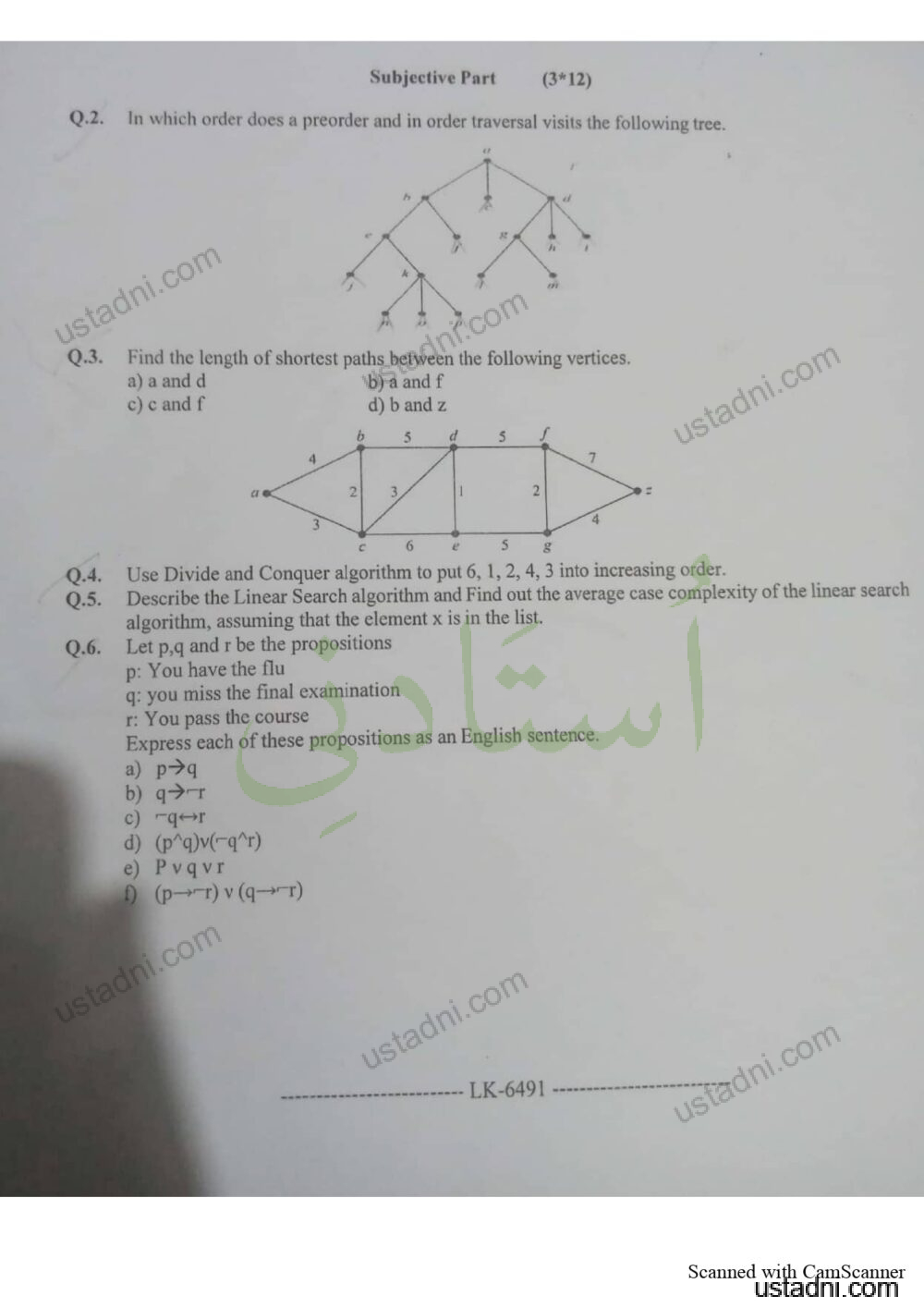 Discrete Structures BSIT University Of Sargodha (UOS) 2022
Uploaded 1 year ago
Download ↓
Discrete Structures BSIT University Of Sargodha (UOS) 2022
Uploaded 1 year ago
Download ↓
Paper text
a. Write |A U C|
b. Write (A N
B) × (A N
C)
Q 3: Answer these questions about the rooted tree illustrated?
a) What is the height of the given tree?
(12]
b) Which vertices are ancestors of q?
d) What are the internal vertices of the
tree?
c) Which vertices are descendants of d?
ustadni.com
adre
8
ustadni.com
Q 4:
I.
Il.
05:
[6+6]
What are the quotient and remainder when -11 is divided by 3?
Show that 2x? + 3x + 1 is O(x).
[6+6]
a. Determine whether the graph shown below has a Hamilton circuit or Hamilton
Path. Construct an Hamilton circuit or path if one exists?
b. Solve and find either the given graph is bipartite?
a
long. Each character in a password is an uppercase letter or a digit and each password
must contain at least one digit. How many possible passwords are there??-
CO
II. Use tree diagram to represents how many bits string of length four do not have three
conductive O's?
Q7:
1.
[6+6]
Represent this relation on a Set A = (1, 2, 3,
4) with the help of diagraph?
I. Find either this relation is reflexive, symmetric, antisymmeteic or transitive?
R = {(1,3), (1,4), (2,1), (2,2), (2,3), (3,1), (3,3), (4,1), (4,3);
visit website: ustadni.com