
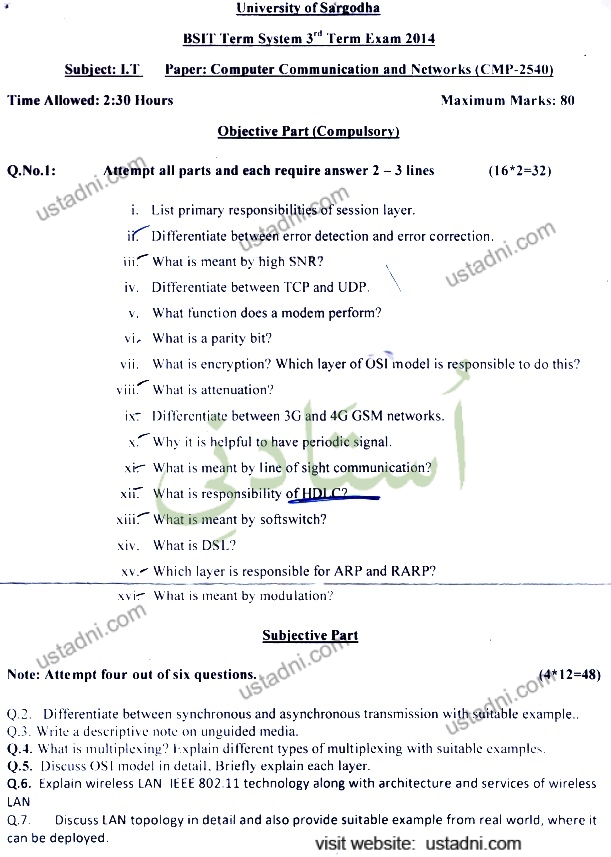
University of Sargodha BSIT Term System 3d Term Exam 2014 Subject: I.T Paper: Computer Communication and Networks (CMP-2540) Time Allowed: 2:30 Hours
Discussion
Ask a question about this paper, or help someone else with theirs. Answers are emailed to whoever asked.
No questions yet — be the first to ask.
More Computer Communication and Network papers
See all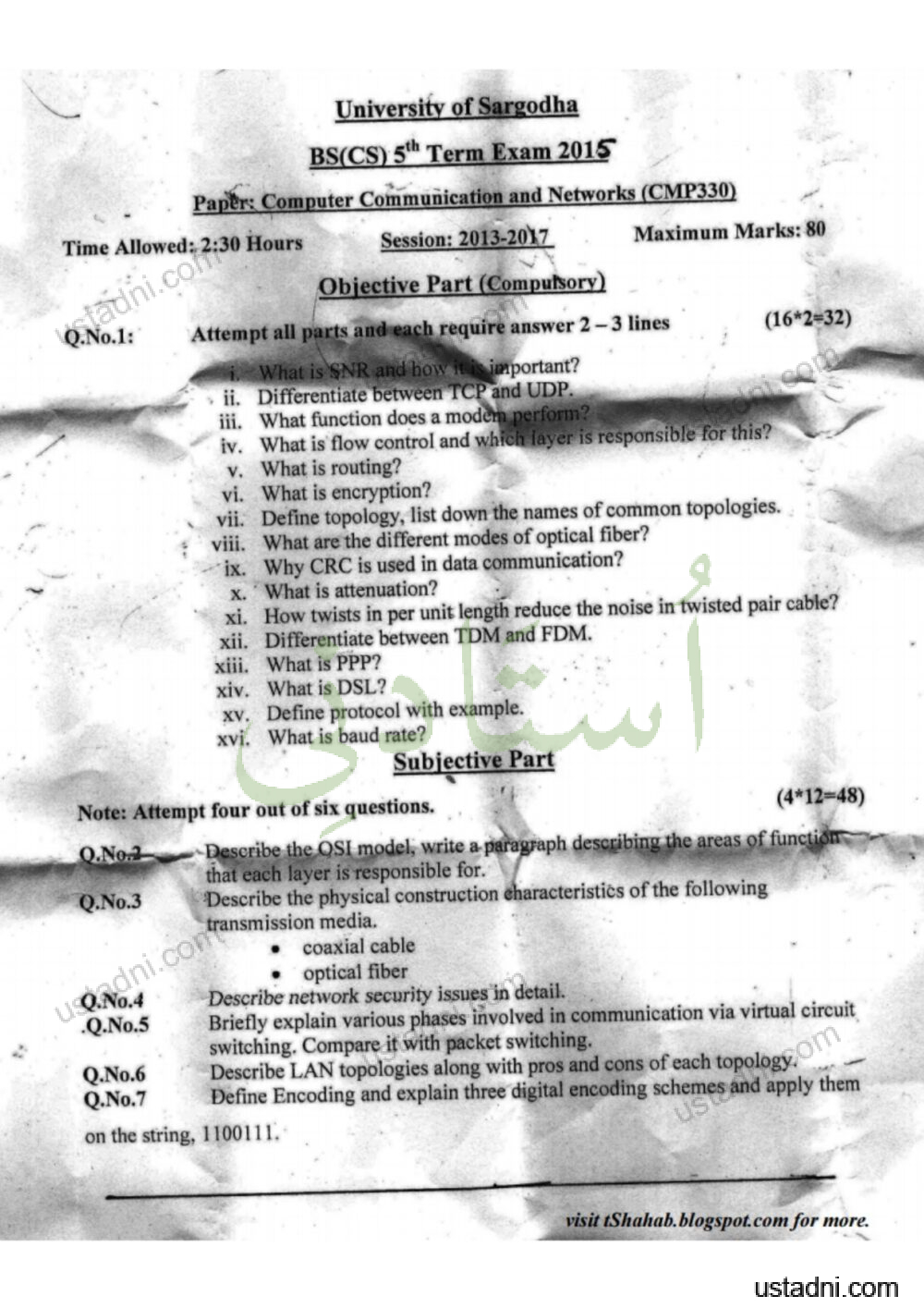 Computer Communication and Network BS 5 Semester/Term University Of Sargodha (UOS) 2015
Uploaded 1 year ago
Download ↓
Computer Communication and Network BS 5 Semester/Term University Of Sargodha (UOS) 2015
Uploaded 1 year ago
Download ↓
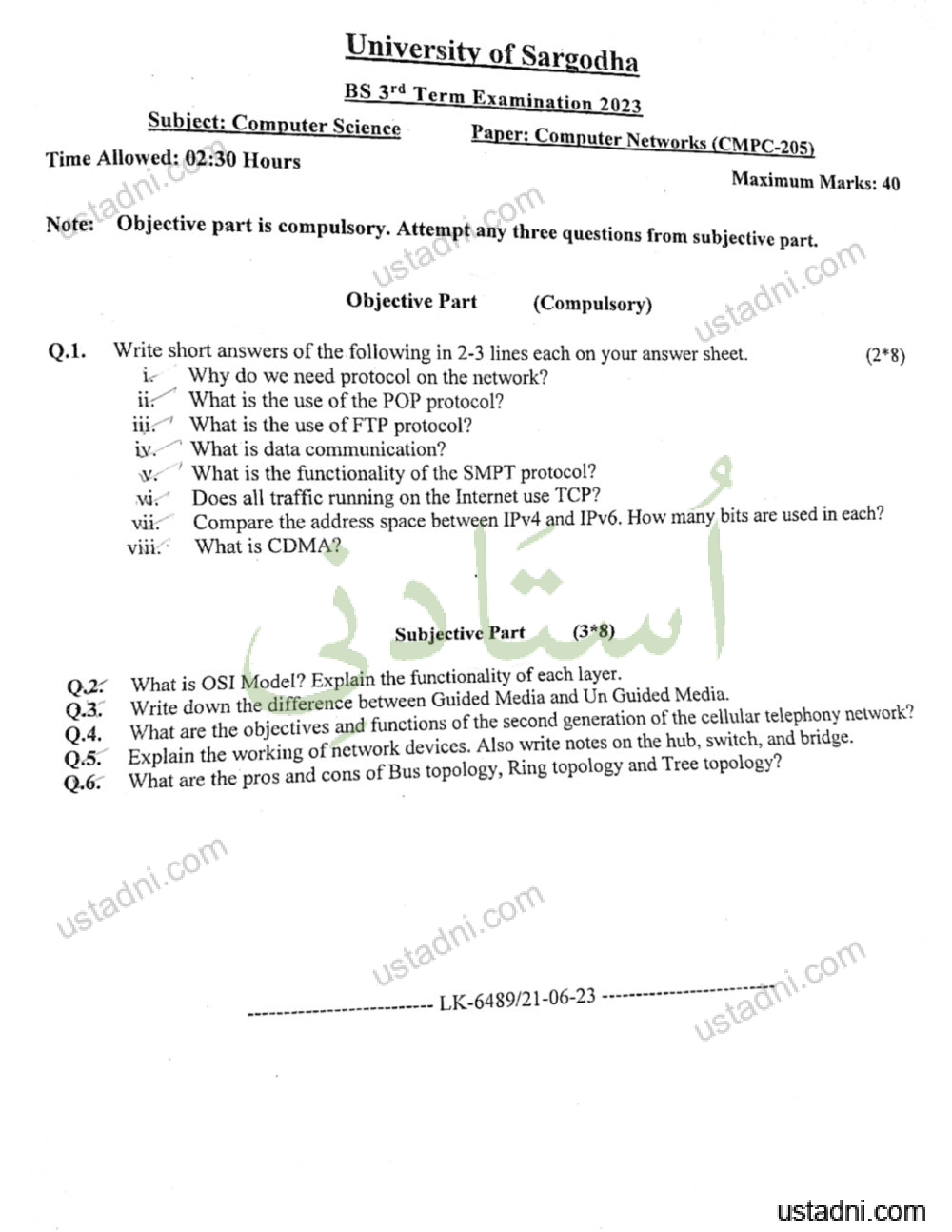 Computer Communication and Network BS/MPhil Computer Science/MS Computer Science 3 Semester/Term University Of Sargodha (UOS) 2023
Uploaded 1 year ago
Download ↓
Computer Communication and Network BS/MPhil Computer Science/MS Computer Science 3 Semester/Term University Of Sargodha (UOS) 2023
Uploaded 1 year ago
Download ↓
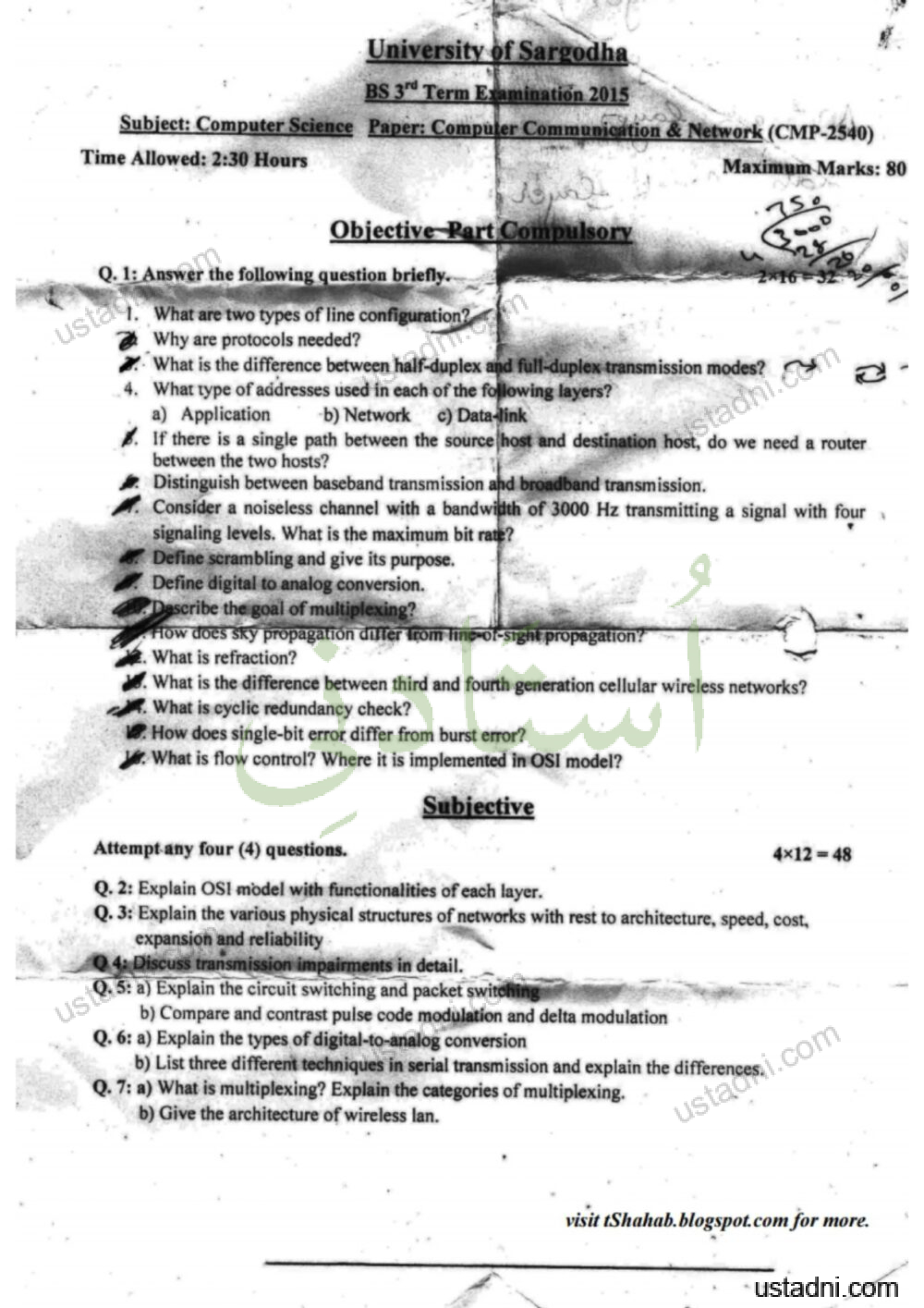 Computer Communication and Network BS/MPhil Computer Science/MS Computer Science 3 Semester/Term University Of Sargodha (UOS) 2015
Uploaded 1 year ago
Download ↓
Computer Communication and Network BS/MPhil Computer Science/MS Computer Science 3 Semester/Term University Of Sargodha (UOS) 2015
Uploaded 1 year ago
Download ↓
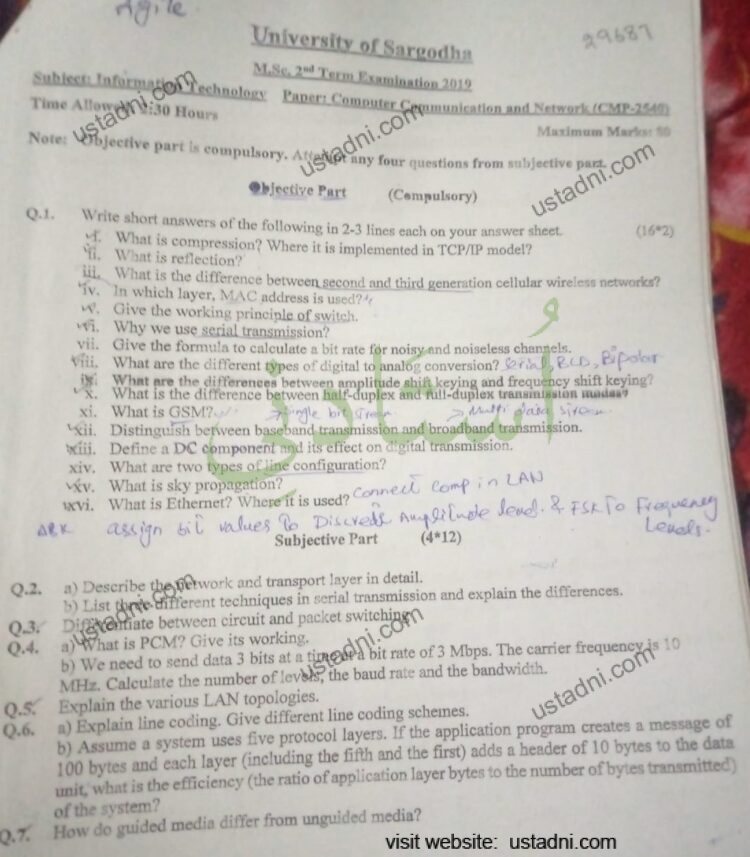 Computer Communication and Network Msc IT University Of Sargodha (UOS) 2019
Uploaded 3 years ago
Download ↓
Computer Communication and Network Msc IT University Of Sargodha (UOS) 2019
Uploaded 3 years ago
Download ↓
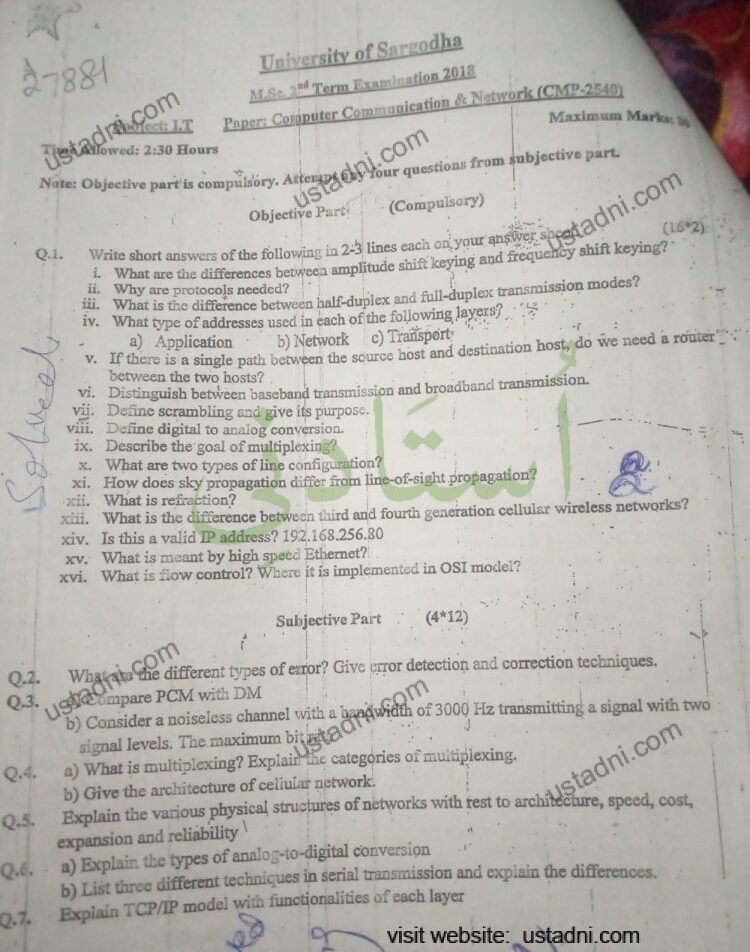 Computer Communication and Network Msc IT University Of Sargodha (UOS) 2018
Uploaded 3 years ago
Download ↓
Computer Communication and Network Msc IT University Of Sargodha (UOS) 2018
Uploaded 3 years ago
Download ↓
Paper text
University of Sargodha
BSIT Term System 3d Term Exam 2014
Subject: I.T Paper: Computer Communication and Networks (CMP-2540)
Time Allowed: 2:30 Hours
Maximum Marks: 80
Objective Part (Compulsory)
Q.No.l:
Attempt all parts and each require answer 2 - 3 lines
(16*2=32)
ustadn
i. List primary responsibilities of session layer.
ir. Dilterentiate between error detection and error correction.
iii. What is meant by high SNR?
iv. Ditferentiate between TCP and UDP.
ustadni.com
v. What function does a modem perform?
vi. What is a parity bit?
vii. What is encryption? Which layer of OSI model is responsible to do this?
vilt. What is attenuation?
ix: Differentiate between 3G and 4G GSM networks.
x. Why it is helpful to have periodic signal.
xi. What is meant by line of sight communication?
xiT. What is responsibility of HDLC2
xili. What is meant by softswitch?
xiv. What is DSL?
xv.< Which layer is responsible for ARP and RARP?
xvi. What is meant by modulation?
istadni.com
Subjective Part
Note: Attempt four out of six questions ladni cof
(4*12=48)
Q.2. Differentiate between synchronous and asynchronous transmission with suitable example..
Q.3. Write a descriptive note on unguided media.
Q.4. What is multiplexing? Explain different types of multiplexing with suitable examples.
Q.5. Discuss OSI model in detail. Briefly explain each layer.
Q.6. Explain wireless LAN IEEE 802.11 technology along with architecture and services of wireless
LAN
Q.7.
can be deployed.
Discuss LAN topology in detail and also provide suitable example from real world, where it
visit website: ustadni.com